Follow-up email
Follow up email after interview generator
Learn how to write a follow up email that gets responses — after interviews, applications, and cold outreach
Drop your resume
Drag a file here - Analysis would be ready in seconds.
No sign up required
The struggle
Stop fighting with broken document formatting
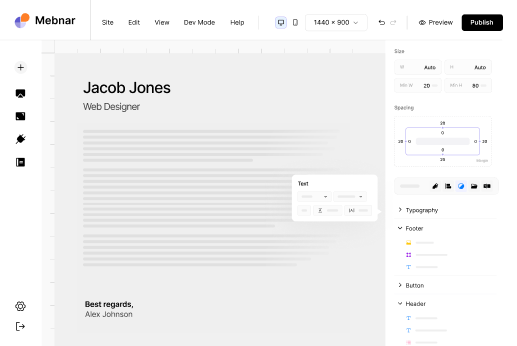
Why manual editing is a nightmare
Hours wasted fixing broken layouts and fighting with stubborn margins.
Generic templates look unprofessional
One edit breaks entire layout
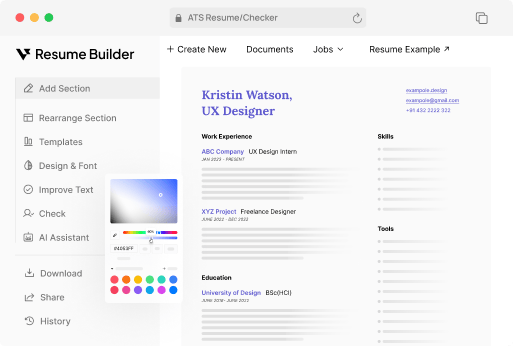
Create polished resumes instantly
AI creates professional, interview-ready resumes in seconds.
Auto-formatting keeps layout perfect
AI writes professional content instantly
Interview made easy
Explore specialized tools for every interview stage


Answer
AI Interview Copilot
Instant, personalized, actionable support during live interviews
Explore the AI Interview CopilotQuestion 2
You
Free tools
Powerful tools to land your dream job
FAQ
Follow up email questions answered
What is a follow up email after application?
A follow up email after application is sent 5–10 business days after submitting your resume and cover letter if you have not heard back. Its goal is to reaffirm your interest, signal proactiveness, and keep your application visible when recruiters are juggling high volumes. Keep it brief — two or three sentences. Reference the specific role and the date you applied, express continued interest, and invite them to reach out if they need anything. Most applicants never follow up, which makes doing so a low-cost way to stand out.
What is a cold email follow up?
A cold email follow up is a second or third message sent after your initial unsolicited outreach received no reply. The best cold email follow ups are shorter than the original and add a new angle — a relevant question, a short proof point, or a concrete observation — rather than simply restating the first message. Avoid reheating the same ask. One to two follow ups is generally the upper limit before you accept the silence as an answer.
What is an interview follow-up email after 2 weeks?
An interview follow-up email after 2 weeks is appropriate when the hiring team's stated decision window has passed with no update. At that point, a brief professional check-in is expected rather than presumptuous. Acknowledge the time elapsed, restate your enthusiasm for the role, and ask politely for a timeline update. Keep it to three sentences — you are nudging, not lobbying. If you genuinely have a competing offer at this stage, it is also appropriate to mention it respectfully.
What is the best subject line for a follow up email?
Short and specific always beats clever. For interview follow-ups: "Following up — [Job Title] interview on [Date]." For application follow-ups: "Re: [Job Title] application — [Your Name]." For cold outreach, prefix your original subject with "Re:" so the thread looks familiar rather than out of the blue. Avoid vague lines like "Checking in" or "Quick question" — they feel low-effort and are easy to deprioritize. One concrete detail is all it takes to make the subject feel intentional.
How to write a follow up email after no response?
Start with a short, direct subject line that references the original conversation or role. In the body, acknowledge you know they are busy and keep the ask small — a yes/no, a quick update, or a redirect to the right person. Avoid phrases like "just checking in" or "circling back," which signal low confidence. Reference something specific — the role, the interview date, or a detail from your conversation — so the reader knows immediately what this is about. Send it once, at most twice, then let it go.
How many times should you follow up after an interview?
Once is usually enough — twice is the reasonable ceiling. Send your first follow-up within 24–48 hours of the interview. If the decision window they gave you passes with no update, one more check-in is appropriate. Beyond that, you risk signaling desperation rather than enthusiasm. The exception: if you have a competing offer and need a decision, a single direct email stating that is professional and gives them a concrete reason to move. Frame it as a courtesy, not an ultimatum.
What does sending a follow-up email after no response sample look like?
A sending a follow-up email after no response sample typically has four elements: a subject line referencing the role and original date, a one-sentence opener acknowledging the time, a two-sentence restatement of your interest and fit, and a single clear ask — usually a timeline update or confirmation that the position is still active. The whole email should fit comfortably in a preview pane. Brevity signals confidence; length signals anxiety. The generator above handles the structure automatically — paste your context and it tailors the draft to your situation.
Is it annoying to send a follow up email after an interview?
No — it is expected. Most hiring managers see a thoughtful follow-up as a positive signal. What can feel annoying is frequency: following up every few days, sending long emails, or escalating to phone calls without being invited to. One well-timed, brief follow-up reads as professional initiative. The threshold for "annoying" is higher than most candidates assume, which means the bigger risk is not sending one at all.