Arlene McCoy
Marketing Coordinator

I have ADHD so interviews are really hard for me. The transcription feature alone was worth it. I could actually follow along without panicking about what I missed
Why keywords matter
Interview made easy


Answer
Question 2
You
Free tools
FAQ
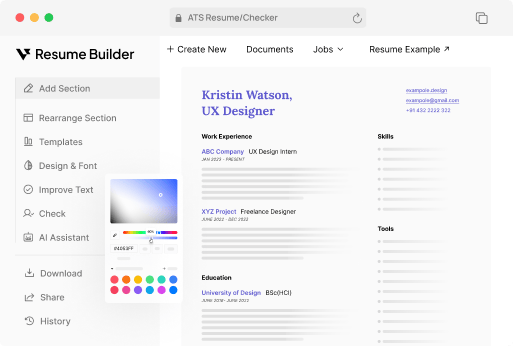
An AI resume rater evaluates your resume across several dimensions: ATS compatibility (formatting and keyword alignment), clarity (how easy it is to skim), impact (whether your bullets communicate results), and completeness (missing sections or thin content). Each category gets a score with specific feedback, so you know exactly what is dragging your overall rating down and what to fix first.
Resume scores are typically calculated by analyzing formatting structure, keyword density relative to common job requirements, the presence of quantified achievements, readability metrics, and section completeness. Different tools weight these categories differently. A strong score generally reflects a resume that is clean enough for ATS to parse, keyword-aligned enough to surface in searches, and compelling enough to hold a recruiter's attention for the critical first 10 seconds.
A score above 80 out of 100 generally indicates a resume that is ATS-ready and recruiter-friendly. Scores in the 60–79 range usually signal specific gaps — weak keyword coverage, thin bullet points, or formatting issues — that are fixable with targeted edits. Anything below 60 often reflects structural problems that go beyond surface polish. Use the score as a diagnostic, not a verdict: a high score in the wrong area matters less than solid keyword alignment with the actual job you are applying for.
Your ATS score is not directly visible to employers — it is a tool for you to benchmark your resume against what ATS systems are looking for. What affects your application is the underlying quality the score reflects: whether your resume uses the right keywords, whether it parses cleanly, and whether your experience reads as relevant to the role. A resume rater helps you surface the same gaps that an ATS would flag before your application is ever seen by a human.
Start with the lowest-scoring category in your rating breakdown. For ATS issues, clean up formatting, remove tables and graphics, and mirror keywords from the job description. For impact, convert passive bullets to achievement-focused statements with numbers. For clarity, tighten long sentences and use standard section headers. Make one category of changes at a time and re-rate to see what moved — it is easier to track progress than trying to fix everything at once.
Testimonials
Join thousands of candidates and start landing offers
Marketing Coordinator
I have ADHD so interviews are really hard for me. The transcription feature alone was worth it. I could actually follow along without panicking about what I missed

Web Designer

I blank on things I know cold when I get nervous. Just knowing I had a backup helped me stay calm. I actually made it through without freezing for once

Software Developer

Got hit with a question I had never seen before. Normally that is where I fall apart. This time I had something to work from and actually got through it

Software Tester

I always know what I want to say but under pressure it just comes out wrong. This helped me actually say it clearly. That part alone was a game changer for me

Project Manager

I had not interviewed in almost 7 years and had no idea how to talk about my own work anymore. It helped me frame things in a way that actually made sense to the interviewer

Sales Manager

I bombed my first interview back after a career break. Used this for the next one and it was night and day. I knew my stuff, I just needed help getting it out